Fort Lauderdale, FL – March 3, 2026 – As thousands of visitors are expected to arrive in South Florida for spring break, Care Resource’s The SPOT (The Special Purpose Outreach Team) is mobilizing to promote safety, prevent overdose deaths, and support community well-being through its annual Spring Break Harm Reduction Campaign.
“Every year thousands of students come to Fort Lauderdale for spring break, and they want to have a good time and party. We’re not here to judge anyone’s choices. We’re here to keep people alive. The reality is that opioid overdose is a risk, especially with today’s unpredictable drug supply. We want people to have the tools, the knowledge, and the confidence to respond and save a life if needed,” – Emelina Martinez, Harm Reduction Programs Manager.
As Broward County’s only approved Syringe Services Program, The SPOT is taking proactive steps to ensure college students, beachgoers, and local residents have access to life-saving resources during one of the busiest seasons of the year.
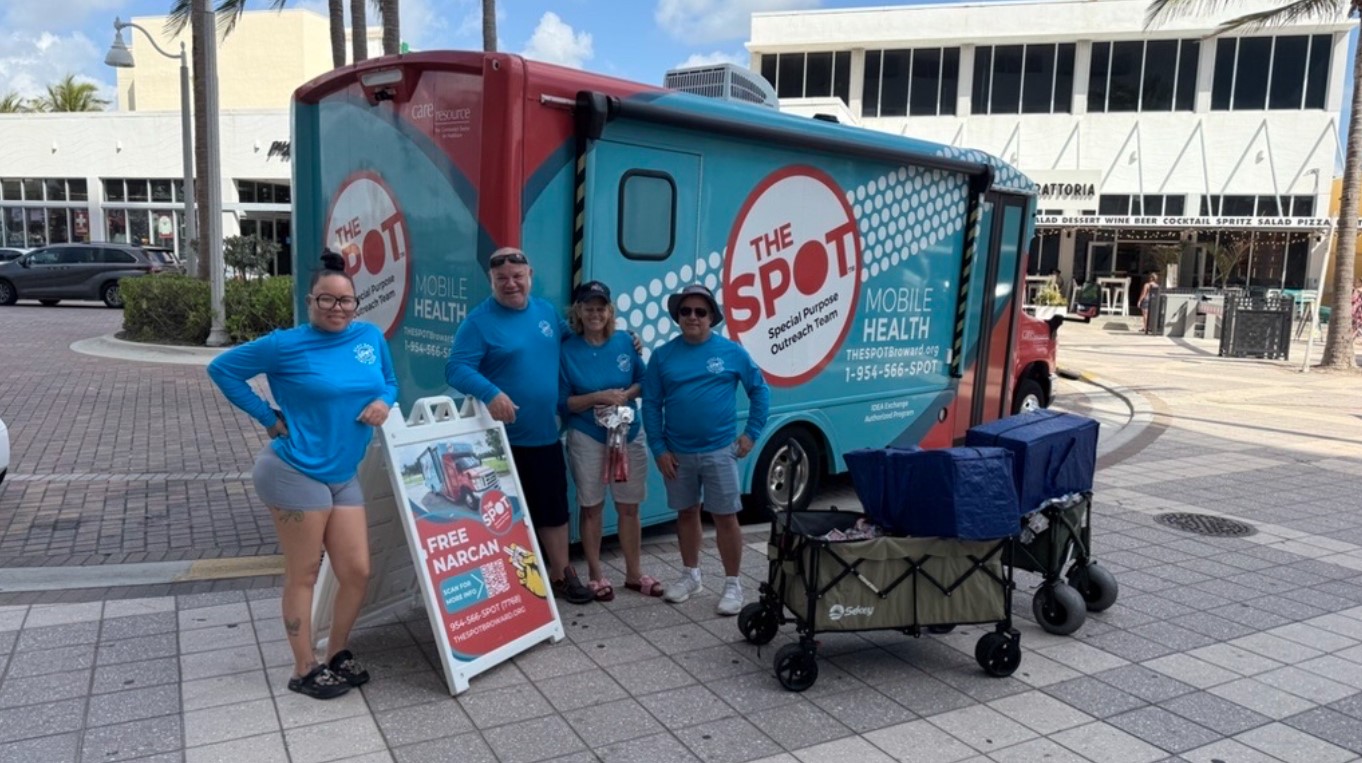
During last year’s campaign alone, The SPOT distributed nearly 13,700 doses of naloxone, an emergency opioid overdose reversal drug, equipping community members with the tools and knowledge to respond in an emergency. This year, The SPOT will again be at Fort Lauderdale Beach every weekend in March passing out naloxone and educating the community on how to save lives and prevent opioid overdose deaths.
“Every dose of naloxone we put into someone’s hands increases the chance that a life will be saved. Harm reduction is about meeting people where they are, without judgment, and giving them the tools and knowledge to reduce risk. During spring break, that approach becomes even more critical.” – Dr. Thomas Smith, Ph.D., LMHC, LMFT, MCAP, Chief Behavioral Health Officer at Care Resource.
The SPOT’s mobile medical clinic will follow its regular weekly schedule, ensuring harm reduction services are accessible where they are needed most.
During the weekdays The SPOT is out in the community:
- Distributing free naloxone
- Providing fentanyl test strips
- Offering HIV & Hepatitis C testing
- Delivering wound care and basic medical services
- Exchanging used syringes for new syringes at no cost
- Educating the public on overdose prevention and safer substance use practices
By empowering individuals with education and resources, The SPOT strengthens community response and transforms bystanders into lifesavers.
For more information about The SPOT, to request naloxone, or to report an overdose reversal, please visit thespotbroward.org, call 954-566-SPOT (7768), or email TheSPOT@careresource.org. Weekly schedules are posted on Instagram (@thespotbroward) and Facebook (The SPOT Broward).
About The SPOT:
The SPOT is a mobile medical clinic and outreach program operated by Care Resource, providing no-cost harm reduction resources and medical services to communities in need. Through education, prevention, and support, The SPOT aims to make a positive impact on public health and safety.
About Care Resource:
Care Resource is a 501(c)(3) nonprofit organization and a Federally Qualified Health Center (FQHC) with four locations in Midtown Miami, Little Havana, Miami Beach and Fort Lauderdale. The health center provides comprehensive health and support services to meet the healthcare needs of South Florida’s pediatric, adolescent, and adult populations.
For media inquiries, please contact Jonathan Welsh, Director of Marketing and Communications at jwelsh@careresource.org